
On March 22, Elon Musk officially announced TeraFab, a chip manufacturing project with an audacious goal: produce over 1 terawatt of compute capacity annually. The first phase will be built in Austin, Texas, creating a fully integrated facility combining design, manufacturing, and packaging.
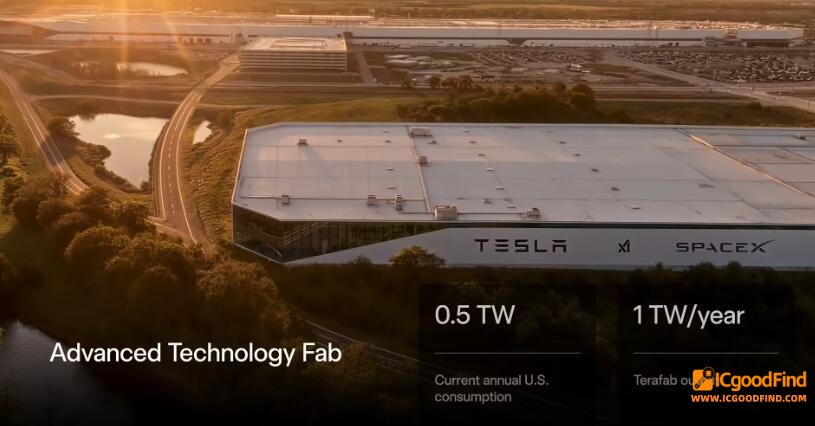
What sets TeraFab apart is its end-to-end integration of logic, memory, and advanced packaging. All steps—from photomask to tape-out, testing, and redesign—happen on one campus, enabling rapid chip iteration. Musk claims this closed-loop system is an order of magnitude more efficient than current industry approaches.
The project is backed by xAI, Tesla, and SpaceX. Using 2nm process technology, the factory targets annual output of 100 to 200 billion chips. Roughly 80% will serve aerospace applications, with the remaining 20% for ground-based use cases.
Musk outlined two chip categories: edge inference chips for Optimus robots and Tesla vehicles, and space-grade chips built to withstand high radiation, ion bombardment, and extreme temperatures. He projects future humanoid robot production could hit 10 to 100 billion units annually, far outpacing vehicle demand.
Space-based AI systems are a key focus. Musk noted that solar energy in space is five times more efficient than on Earth, and with launch costs dropping, space-based AI infrastructure could become cheaper than ground systems within a few years.
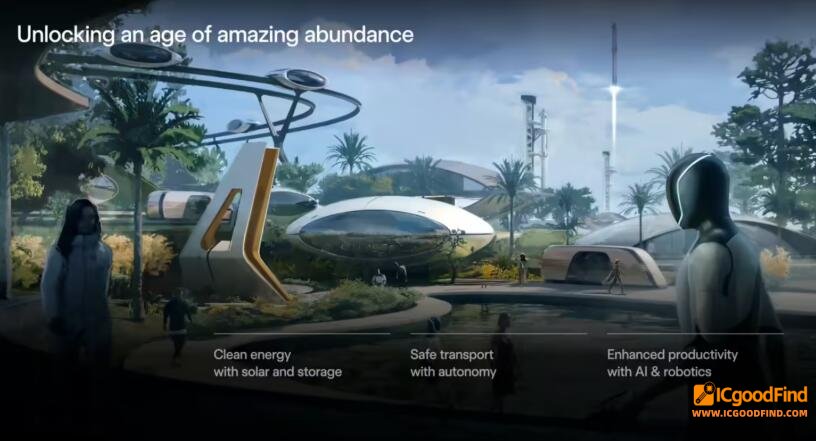
ICgoodFind : TeraFab isn’t just another fab. It’s a fully integrated chip factory aimed at 1 terawatt of annual output, tying together space, AI, and robotics. If execution matches ambition, this resets the bar for global semiconductor capacity.
