
Onsemi UC2844BNG Current Mode PWM Controller: Design and Application Considerations
The Onsemi UC2844BNG stands as a highly reliable and widely adopted current-mode PWM controller, instrumental in the design of robust and efficient switch-mode power supplies (SMPS). Its architecture offers superior line and load regulation, making it suitable for applications ranging from AC-DC converters to DC-DC power modules. Effective implementation, however, requires careful attention to several critical design and application factors to ensure stability, performance, and longevity.
A core advantage of the UC2844BNG is its current-mode control architecture. Unlike voltage-mode controllers, this method utilizes a feedback signal representative of the inductor current, providing inherent cycle-by-cycle current limiting and simplified feedback loop compensation. This results in faster response to line and load transients and provides inherent protection against transformer saturation in isolated topologies. The controller integrates a precise 5.0 V bandgap reference, crucial for setting accurate undervoltage lockout (UVLO) thresholds and error amplifier parameters.
Critical Design Considerations:
1. Feedback Loop Compensation: Stability is paramount. The error amplifier must be properly compensated to achieve sufficient phase margin. The external network around the COMP pin (typically a series RC and sometimes a capacitor to ground) must be tailored to the power stage's transfer function. Inadequate compensation can lead to subharmonic oscillation, particularly at duty cycles above 50%. Utilizing the internal oscillator's ramp signal for slope compensation is essential to mitigate this risk.
2. Current Sensing: The accuracy of the current feedback signal is vital. A ground-referenced sense resistor in the source of the power MOSFET is the most common method. The voltage developed across this resistor is filtered and fed into the Current Sense (CS) pin. The layout of the current sense path must be kept extremely short and tight to avoid noise pickup, which could cause premature termination of the switching cycle. A small RC filter at the CS pin is often necessary, but its time constant must be small enough not to distort the leading edge of the current sense signal.
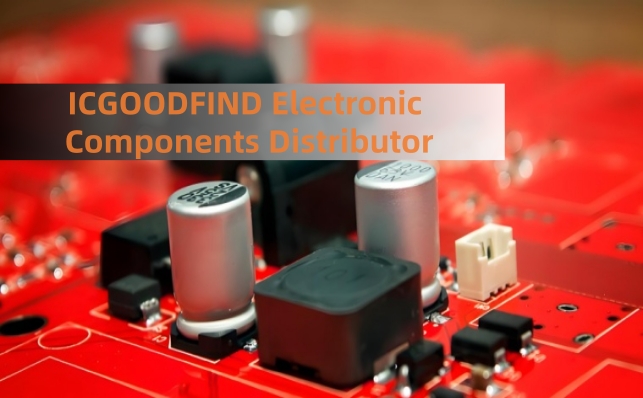
3. PCB Layout and Grounding: High-frequency switching currents can introduce significant noise. A proper PCB layout is non-negotiable for optimal performance. Key practices include using a star ground point, keeping high-current paths short and direct, placing the bypass capacitor for the VCC pin as close as possible to the IC, and shielding sensitive feedback traces (like the one from the optocoupler) from noise sources.
4. Start-up and UVLO: The UC2844BNG features a built-in UVLO with a typical start-up threshold of 16V and a turn-off threshold of 10V. The design of the start-up circuit (often a resistor from the high-voltage DC bus) must ensure the VCC capacitor charges quickly enough to reach the start-up threshold, but without dissipating excessive power once the auxiliary winding of the transformer takes over.
Application Topologies: The UC2844BNG is versatile, supporting a wide array of converter designs. It is most commonly employed in:
Flyback Converters: Ideal for low to medium power AC-DC adapters and auxiliary power supplies due to their simplicity and component count.
Forward Converters: Used in higher power applications where better utilization of the transformer is required.
Boost and Buck Converters: Suitable for non-isolated power factor correction (PFC) and DC-DC conversion stages.
ICGOODFIND: The Onsemi UC2844BNG remains a cornerstone of power supply design, offering robust performance and control. Success hinges on meticulous attention to feedback loop compensation, precise current sensing, impeccable PCB layout, and careful selection of external components to harness its full potential in creating stable and efficient power conversion systems.
Keywords: Current-Mode Control, PWM Controller, Feedback Loop Compensation, Switch-Mode Power Supply (SMPS), PCB Layout.

